Low Water Pressure in Your Home? How to Find the Cause Before You Call a Plumber
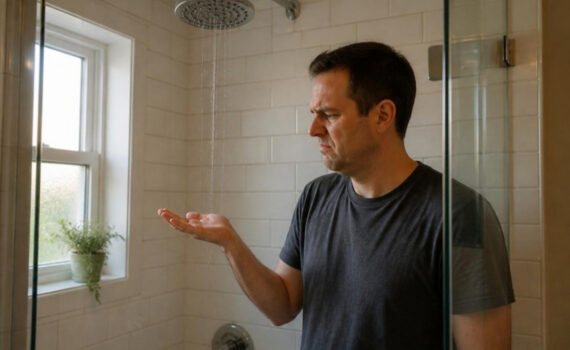
You step into the shower and get a weak, thin stream instead of a steady spray. The washing machine takes twice as long to fill as it used to. Someone flushes a toilet while the kitchen faucet is running, and the faucet slows to a dribble. Low water pressure rarely shows up overnight. It usually creeps in slowly, and most homeowners just get used to it until it becomes impossible to ignore.
The good news is that low pressure almost always has a findable cause. Some causes take five minutes and a little vinegar to fix. Others point to a worn part or aging pipes that need a professional. The trick is knowing which one you are dealing with, and that starts with a few simple questions.
Start Here: Is It One Fixture or the Whole House?
Before you look at anything else, walk through the house and test several fixtures. Turn on the kitchen faucet, a bathroom sink, the tub, and an outside hose bib one at a time. You are trying to answer a single question: is the low pressure everywhere, or only in one spot?
This one check cuts the list of possible causes in half. If only one faucet or showerhead is weak, the problem is almost always at or near that fixture. If every tap in the house is weak, the cause is upstream, somewhere between the street and the point where the water lines split off to each room.
It is also worth checking hot and cold separately. If the cold water is strong but the hot water is weak at every faucet, the problem is likely at your water heater, not in the rest of the plumbing.
When Only One Fixture Is Weak
A clogged aerator or showerhead. This is the most common cause by far. The small screen at the tip of your faucet, called the aerator, catches grit and mineral flakes. Showerheads collect the same buildup in their tiny nozzles. In homes with hard water, those deposits can block a surprising amount of flow. Unscrew the aerator (wrap the jaws of your pliers with tape to protect the finish), rinse out the debris, and soak it in white vinegar for an hour or so. Most showerheads can be soaked the same way. If pressure jumps back after cleaning, you found your problem. If the buildup keeps coming back quickly, a water softener may be worth a look.
A partly closed shut-off valve. Under most sinks and behind most toilets there is a small valve, often called an angle stop. If someone did a repair recently and did not open it all the way, that fixture will run weak. Make sure the handle is turned fully counterclockwise. Do not force it if it feels stuck. Old valves can snap or start leaking when they are cranked hard.
A worn faucet cartridge. Single-handle faucets use a cartridge to mix hot and cold water. When that cartridge wears out or fills with debris, flow can drop on one side or both. Cartridges are replaceable, but you have to match the exact part to your faucet brand and model. If you are not sure what you have, our team handles faucet and fixture repair every day.
Hot water only. If the hot side is weak everywhere, check that the cold supply valve on top of your water heater is fully open. Sediment that collects at the bottom of a tank, or scale inside the outlet fittings, can also restrict flow. Our guide on common water heater problems covers flushing and other warning signs.
When the Whole House Is Weak
The main shut-off is not fully open. It sounds too simple, but it happens often after plumbing work, a remodel, or a leak repair. Find your main shut-off valve and make sure it is all the way open. A gate valve with a round handle should be turned fully counterclockwise. A ball valve with a lever handle should be parallel with the pipe.
A failing pressure regulator. Many Bay Area homes have a pressure reducing valve, often called a PRV or pressure regulator, installed where the water line enters the house. Its job is to bring high street pressure down to a safe level for your pipes and fixtures. These valves usually look like a bell-shaped brass fitting with an adjusting screw on top. They wear out over time, often somewhere in the 10 to 15 year range. When the internal spring or diaphragm fails, the valve can lock down too far and choke the whole house. A PRV that is going bad can also cause pressure that rises and falls without warning.
Old galvanized steel pipes. Homes built before the 1960s often still have galvanized water lines in some sections. These pipes corrode from the inside out. Over decades, rust and scale build up on the inner walls until a pipe that started at three-quarters of an inch wide has an opening the size of a pencil. Pressure fades slowly, and you may also notice brownish water when a tap first opens. You can learn more about the different materials in our post on plumbing pipes and their uses.
A hidden leak. Water that escapes through a cracked supply line, under the slab, or in the yard is water that never makes it to your faucets. If your pressure dropped and your bill went up around the same time, a leak moves to the top of the list. Our post on the signs of a hidden water leak walks through what to look for.
A problem on the city side. Water main repairs, hydrant flushing, and heavy demand in the neighborhood can all lower pressure for a few hours or a few days. Before you start taking anything apart, ask a neighbor whether they have noticed the same thing. If the whole street is affected, call your water utility.
Two Easy Tests You Can Do Yourself
1. Measure your pressure with a gauge. A water pressure gauge that screws onto a hose bib costs little at any hardware store, and it takes the guesswork out of the problem. Turn off every faucet and appliance in the house, attach the gauge to the outdoor spigot closest to where your water line comes in, and open the spigot all the way. Most homes do well somewhere between 50 and 70 psi. A reading under about 40 psi will feel weak at the shower. On the other end, the California Plumbing Code calls for a pressure regulator when incoming pressure goes above 80 psi, because that much force wears out valves, hoses, and fittings early. High pressure is also a common cause of banging pipes.
2. Check your water meter for movement. Make sure no water is running anywhere in the house, including the irrigation system, ice maker, and washing machine. Then look at your meter. Most meters have a small leak indicator, often a little triangle or star-shaped dial, that spins when water is flowing. If it is moving while everything is off, water is going somewhere it should not. A meter that runs steadily is also one of the most common reasons homeowners ask why their water bill is too high.
A Few Things to Avoid
Do not crank the adjustment screw on a pressure regulator up and down without a gauge on the system. A worn regulator may not respond the way you expect, and you can end up with dangerously high pressure that strains your water heater and appliance hoses.
Avoid pulling the flow restrictor out of a new showerhead to “fix” pressure. Those restrictors are there to meet California water-efficiency standards, and removing them rarely solves a real pressure problem. It usually just hides it.
Finally, do not use chemical cleaners or harsh acids inside supply lines. Vinegar on aerators and showerheads is fine. Anything stronger belongs in the hands of a professional.
How Plumbers Fix Low Water Pressure
When we visit a home with weak pressure, we start by measuring pressure at several points in the system. Comparing readings at the meter, at the regulator, and at different fixtures shows us exactly where the pressure is being lost. From there, the repair depends on what we find:
- Regulator replacement: A new pressure reducing valve, set correctly and checked with a gauge, often restores strong, steady pressure to the whole house in a single visit.
- Repiping: If corroded galvanized lines are choking the flow, we can replace the worst sections or the whole system with copper or PEX through our water line repair and repiping service.
- Leak detection: When a meter test points to a hidden leak, we use acoustic and thermal tools to find it without tearing open walls or floors. Leaks under the foundation are handled through our slab leak detection and repair service.
- Booster pumps: For some hillside homes where city pressure is naturally low because of elevation, a booster pump can bring pressure up to a comfortable level.
When to Call a Plumber
If cleaning your aerators and checking your valves does not bring the pressure back, it is time for a closer look. Call a plumber if the pressure dropped suddenly, if it keeps going up and down, if your gauge reads below 40 or above 80 psi, if the meter shows water moving when nothing is on, or if you see brown water along with weak flow. Each of those points to a problem that will usually get worse, not better.
Good water pressure is something most people never think about until it is gone. If your shower has lost its strength, our residential plumbing team can track down the cause and get it fixed the right way. Contact us to schedule a visit.