Where Is Your Main Water Shut-Off Valve? A Homeowner’s Guide to Stopping a Leak Fast
A washing machine hose bursts while you are at the grocery store. A supply line under the bathroom sink splits in the middle of the night. A pipe cracks after an earthquake. In every one of these situations, the amount of damage depends on one thing more than anything else: how fast someone can stop the water.
A broken supply line can release several gallons of water every minute. That means the time you spend running around the house looking for the right valve is time that water spends soaking into drywall, flooring, and cabinets. Yet many homeowners have never seen their main water shut-off valve, and plenty of those who have never tested it to see if it still works.
September is National Preparedness Month, which makes it a good time to take care of this. It takes about fifteen minutes, needs no special tools for most homes, and could save you thousands of dollars in water damage.
Where to Find Your Main Water Shut-Off
The main shut-off is usually located where the water line enters your house. In Bay Area homes, these are the most common places to look:
- On an outside wall: Many homes have the main valve on the front or side of the house, often near a hose bib and just above the ground. Look for a pipe coming up out of the soil and into the wall.
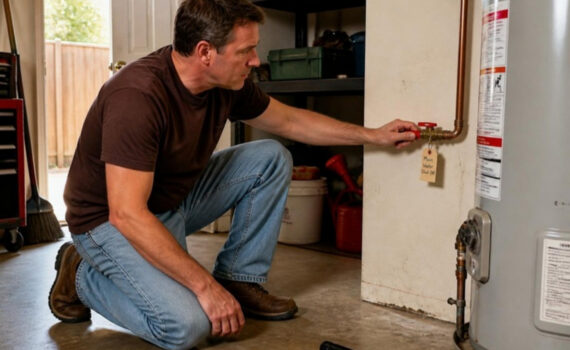
- In the garage: In a lot of homes, the main line runs into the garage near the water heater or along the wall closest to the street.
- In a basement or crawlspace: Older homes, especially in San Francisco and on the Peninsula, often have the main valve on the foundation wall facing the street.
- In a ground box: Some homes have a valve inside a small buried box with a lid, set in the yard between the meter and the house.
- In a condo or apartment: Individual units may have a shut-off in a utility closet, behind an access panel, or under the kitchen sink. Some buildings only have one valve for several units. Ask your HOA or property manager so you know before you need it.
If you still cannot find it, follow the line from your water meter toward the house. The valve is almost always along that path. Your home inspection report is another good place to check, since most inspectors note the location. If you are buying a home, a thorough plumbing inspection should always include it.
Know Which Type of Valve You Have
Gate valves have a round wheel handle that you turn several times to close. They were standard for decades, and many are still in service. The problem is that the internal gate can seize from mineral buildup, or the stem can break off inside the valve when it is forced. A gate valve that has not been touched in twenty years may not close all the way when you finally need it. One that is stuck partly closed is also a common cause of low water pressure throughout the house.
Ball valves have a straight lever handle that turns a quarter turn. When the lever lines up with the pipe, the valve is open. When it sits across the pipe, the valve is closed. Ball valves are faster, more reliable, and much easier to use in a panic. If your home still has an old gate valve as its main shut-off, upgrading to a full-port ball valve is one of the simplest improvements you can make.
How to Test Your Main Shut-Off Safely
Testing the valve once or twice a year keeps it from seizing and tells you right away if it needs attention. Here is how to do it:
- Pick a good time. Choose a moment when no one is showering and the dishwasher and washing machine are not running.
- Close the valve slowly. Turn the wheel clockwise or move the lever a quarter turn. Use steady hand pressure only. Do not use a pipe wrench or a cheater bar on a stiff valve.
- Confirm the water is off. Open a faucet on the lowest floor of the house. The flow should slow and stop within a minute or so. If water keeps trickling, the valve is not sealing fully.
- Open it back up slowly. Turning water back on too quickly can send a surge of air and sediment through the lines. Open the valve gradually, then run a few faucets for a minute until the sputtering stops.
- Check for drips. Look at the valve stem for a few minutes afterward. A small drip at the stem on an older valve is common after it is moved, but it should not be ignored.
If the handle will not turn, the valve does not stop the water, or it starts leaking after you use it, call a plumber. Replacing a main shut-off requires turning off water at the meter and working on the main supply line, which is not a job to improvise.
The Valve at the Street
Your water meter, usually in a concrete box near the sidewalk or curb, also has a valve. That valve belongs to the water utility. It often needs a special meter key to turn, and some water districts prefer that homeowners leave it alone except in a true emergency. Check with your local water provider about their rules.
Either way, make sure the meter box is easy to reach. Keep plants, mulch, and stored items away from the lid. You do not want to be digging through ivy in the dark while water is pouring through your ceiling.
Don’t Forget the Smaller Shut-Off Valves
Not every leak requires shutting off water to the whole house. Most fixtures have their own valves, and knowing them lets you stop a problem in one room while keeping water running everywhere else.
- Under sinks: Small valves called angle stops control the hot and cold lines to each faucet.
- Behind toilets: A single valve near the floor controls the supply line. This is the one to close if a toilet starts to overflow or keeps running nonstop.
- Washing machine: Two valves, hot and cold, sit in the wall box behind the washer. If your machine still uses rubber hoses, replace them with braided stainless steel hoses. Rubber hoses are one of the most common sources of sudden indoor floods.
- Water heater: The cold water inlet valve on top of the tank lets you isolate the heater without shutting off the whole home.
- Refrigerator and ice maker: This line usually has a small valve under the kitchen sink or behind the fridge.
Older fixture valves with multi-turn handles often seize after years of sitting untouched. When we find them during service calls, we usually recommend replacing them with quarter-turn valves. It is a small upgrade that makes every future repair easier. Walking through these valves is also part of a good home plumbing check.
Earthquakes and Your Gas Shut-Off
Here in the Bay Area, being prepared also means knowing where your gas shut-off is. The gas valve is usually next to your gas meter on the outside of the house, and it takes a wrench to turn. Only shut off the gas if you smell gas, hear a hissing sound, or see damage to the gas line. Once the gas is off, it should be turned back on by PG&E or a qualified professional, who will check for leaks and relight your pilot lights safely.
An automatic earthquake shut-off valve takes the guesswork out of this. It closes the gas supply on its own when it senses strong shaking, even if no one is home. Some Bay Area cities require them during certain remodels or home sales, so it is worth checking your local rules. Learn more about our earthquake shut-off valve installations.
Set Your Home Up for a Fast Shut-Off
A few simple steps make a big difference when something actually goes wrong:
- Label it. Hang a bright tag on the main water valve and the gas valve so anyone can find them.
- Show everyone. Walk your family, older kids, and anyone who house-sits for you through where the valves are and how they turn.
- Keep tools nearby. Store a flashlight and the right wrench close to the valve, along with a meter key if your utility allows you to use one.
- Clear the area. Do not let storage boxes, shelving, or landscaping block access to the valve.
- Consider a smart shut-off. Automatic leak detection valves can sense unusual water flow and close the main line on their own, which is especially helpful if you travel often.
What to Do After You Shut the Water Off
Once the water is off, open a faucet on the lowest level to drain pressure from the lines. If water came near outlets or appliances, turn off power to that area at the breaker. Take photos of the damage before you clean up, then start removing standing water. Our guides on steps to take during a plumbing emergency and how to dry flooring after a flood cover the next steps. If you plan to file a claim, read up on whether a burst pipe is covered by insurance.
When to Call a Plumber
Call a plumber if your main valve will not turn, does not fully stop the water, leaks at the stem, or is an old gate valve you do not trust. We can replace it with a reliable ball valve, upgrade worn fixture shut-offs, and make sure your system is ready for the next emergency. And if water is already where it should not be, our emergency plumbing service is ready to help.
Being prepared does not have to be complicated. Find your valve, test it, label it, and show your family where it is. Those fifteen minutes are some of the most valuable plumbing maintenance you can do all year.